 DexSpeak

你可能認識很多英文單字,可是一被問到「你比較喜歡在家工作,還是去辦公室?」,腦中卻只剩下 I think 和 very good。
這時需要補上的,往往不是幾個生僻的「高級詞」,而是能把想法說完整的表達:如何說明立場、如何舉例,以及如何補充一句「不過,也要看情況」。
下面依十種表達用途整理了 100 個雅思口說詞彙與片語,附有繁體中文釋義、原創例句與使用提醒。這是一份練習清單,不是拿到 7–9 分的保證。挑出與自身經驗有關的表達,用進自己的回答,比照順序全部背完更有意義。
開始之前:準確、自然比「高級」更重要
雅思口說綜合評量流暢與連貫、詞彙、文法和發音。詞彙只是其中一項,用得準確、符合語境,比刻意換成複雜表達更有幫助。想確認某個詞是否適合自己,先問:我知道它的意思嗎?能接出完整句子嗎?這個情境真的需要它嗎?
例如,回答「週末喜歡做什麼」時,I usually go for a walk 就很清楚。不必為了使用詞表中的表達,把回答變成正式演講。討論抽象問題時,再用比較、讓步和概括來組織想法。
文中的刪節號表示還需要接續內容;單獨的連接詞通常也需要前後兩層意思。下面的編號是方便查閱的位置,不是學習順序。
1. 表達觀點:說明你怎麼看一件事(1–10)
- From my perspective... — 從我的角度來看……
- I'm inclined to believe... — 我傾向於認為……,語氣比直接下結論更保留。
- It strikes me that... — 我覺得……;某個想法給我這樣的印象。
- What I find particularly interesting is... — 我覺得特別有意思的是……
- I have mixed feelings about... — 我對……感到有些矛盾,既看到好處,也有所顧慮。
- I'm of the opinion that... — 我認為……,偏正式,日常回答通常可直接說 I think。
- To be perfectly honest... — 坦白說……,適合用來承認真實感受。
- If I had to choose... — 如果一定要選的話……
- I'd argue that... — 我的看法是……,接著應給出理由。
- In my experience... — 根據我自己的經驗……,不要用它代表所有人的經驗。
I have mixed feelings about working from home. I enjoy the quiet, but I miss talking to my colleagues in person.
這裡的 mixed feelings 有具體內容:安靜是好處,缺少面對面交流是顧慮。只說一句「我的感受很複雜」卻不加以說明,聽者還是不知道你的觀點。
2. 整理思路:給自己一點思考時間(11–20)
- That's an interesting question... — 這個問題很有意思……,只在確實這麼覺得時使用。
- Let me think about that... — 讓我想一想……
- Off the top of my head... — 沒有仔細想的話,我首先想到的是……
- Now that you mention it... — 你這麼一說,我想到……,需要與對方剛說的話有關。
- Come to think of it... — 仔細一想……;說到這裡,我倒想起來……
- Well, let me see... — 嗯,讓我想想……
- How should I put this... — 這該怎麼說呢……,用於尋找適當的措辭。
- That's a tough one... — 這個真不好回答……
- I haven't really thought about it before, but... — 我以前沒認真想過這件事,不過……
- If I'm being completely honest... — 如果完全說實話……
Off the top of my head, I'd say the best thing about my neighbourhood is the park near my flat.
這些表達可以留出短暫的思考空間,但不要每題都重複同一個開場,更不要連說三句來拖時間。接下來仍然需要回答問題。
3. 連接想法:補充、轉折與結果(21–30)
- Furthermore — 此外,偏正式。
- Moreover — 而且;進一步來說,偏正式。
- In addition to that — 除此之外。
- What's more — 而且;還有一點,可在口語中追加資訊。
- Nevertheless — 儘管如此;然而,偏正式。
- On the contrary — 恰恰相反,用來否定或糾正前面的判斷。
- Having said that — 話雖如此,用來為剛才的觀點補充限制。
- That being said — 即便如此;話雖如此,用途與上一項相近。
- On the flip side — 從另一面來看,比較隨意。
- Consequently — 因此;結果是,強調因果,偏正式。
The buses are cheap and fairly reliable. Having said that, they can get very crowded in the evening.
On the contrary 和 on the other hand 不一樣。 後者呈現事情的另一面;前者是在反駁一個判斷。例如:Some people think the job is easy. On the contrary, it takes years of training. 不要只因為後一句是缺點,就使用 on the contrary。
同樣地,不要把 furthermore、moreover 和 what's more 串在一起。連接詞是在說明兩句話的關係,不是句子的裝飾。
4. 表達程度:讓判斷有準確的分寸(31–40)
- To some extent — 在某種程度上,不表示完全同意。
- To a certain degree — 在一定程度上。
- More or less — 大致;差不多。
- By and large — 總的來說。
- For the most part — 大部分情況下。
- Relatively speaking — 相對而言,需要讓人知道比較對象。
- Comparatively — 相較之下,常修飾形容詞或副詞。
- Substantially — 大幅地;在很大程度上。
- Considerably — 相當多地;顯著地。
- Marginally — 略微地,變化幅度很小。
My current flat is considerably quieter than my old one, although it's only marginally bigger.
這句話區分了兩種差異:安靜得多,但只大了一點。considerably 和 marginally 不能因為都能描述「變化」就互換。
5. 描述事物:讓形容詞提供實際資訊(41–50)
- Compelling — 很有說服力的;引人入勝的,例如 a compelling argument 或 a compelling story。
- Innovative — 創新的,例如 an innovative approach。
- Exceptional — 出色的;非比尋常的,例如 exceptional service。
- Remarkable — 非凡的;值得注意的,例如 remarkable progress。
- Contemporary — 當代的,例如 contemporary art。
- Conventional — 常規的;傳統的,例如 conventional teaching methods。
- Prevalent — 普遍存在的,例如 a problem that is prevalent in large cities。
- Authentic — 真實的;道地的,確切意思取決於語境。
- Distinctive — 特色鮮明的;容易辨認的,例如 a distinctive voice。
- Sustainable — 永續的;能夠長期維持的,既可談環境,也可談做法。
The café has a distinctive style: all the furniture is made from old wooden doors.
說完 distinctive,再補上一個看得見的特點,比接著說 very nice 更具體。也別把 conventional 理解成「一定落後」,或把 contemporary 理解成「一定創新」:這些詞本身不帶有這樣的評價。
6. 解釋與澄清:換個方式把意思說清楚(51–60)
- What I mean by that is... — 我的意思是……
- To put it another way... — 換個說法……
- In other words... — 也就是說……
- The point I'm trying to make is... — 我想說明的是……
- What I'm getting at is... — 我真正想說的是……
- The way I see it... — 在我看來……,用來表達自己的理解,不一定是換句話說。
- Let me elaborate on that... — 讓我進一步說明……,偏正式。
- To clarify... — 說明一下……;澄清一下……
- More specifically... — 更具體地說……
- That is to say... — 也就是說……,通常比 in other words 更正式。
I want a more flexible schedule. What I mean by that is being able to start work earlier and finish earlier.
澄清不等於把同一句話重複一遍。這裡把「彈性」解釋成具體安排,聽者才知道你需要什麼。
7. 比較與對照:把兩個選項放在一起(61–70)
- In comparison with... — 與……相比,後接名詞或名詞片語。
- Similarly — 類似地,指出兩種情況的共同點。
- Likewise — 同樣地。
- As opposed to... — 而不是……;與……相對。
- Unlike... — 不像……,後面通常接名詞、代名詞或名詞片語。
- In contrast — 相較之下,用來強調差異。
- Whereas — 而;然而,連接兩個有對照關係的子句。
- On the other hand — 另一方面,提出另一種考量。
- Alternatively — 或者;也可以,用來提供另一個方案。
- Rather than — 而不是,比較的兩部分應維持合理的結構對應。
My sister likes studying with music, whereas I need complete silence.
注意 unlike 和 whereas 後面的結構不同:Unlike my sister, I prefer silence. 也可以說 My sister likes music, whereas I prefer silence. 不要寫成 Unlike my sister likes music。
8. 主題詞彙:從抽象名詞連到自己的生活(71–80)
- Work-life balance — 工作與生活的平衡。
- Career prospects — 職涯發展前景。
- Cultural diversity — 文化多樣性。
- Social media influence — 社群媒體的影響;放進句子時,也常說 the influence of social media。
- Environmental impact — 對環境的影響,例如 reduce the environmental impact of travel。
- Technological advancement — 科技進步;談多項進展時,也可用 technological advances。
- Educational opportunities — 教育機會。
- Economic development — 經濟發展。
- Public transportation — 大眾運輸;英式英語也常用 public transport。
- Healthcare system — 醫療體系。
Better public transportation would make it easier for people in my town to get to work without driving.
碰到「大議題」,先說一個自己能解釋的例子。談大眾運輸,可以說公車班次、通勤距離和到站時間;談 work-life balance,可以說週末會不會收到工作訊息。不必假裝自己掌握了某個領域的所有知識。
9. 舉例與支持:讓觀點有具體依據(81–90)
- For instance — 例如。
- Take... for example — 就拿……來說,把要舉的對象放在中間。
- A case in point would be... — 一個能說明問題的例子是……,偏正式。
- To illustrate this... — 為了說明這一點……,偏正式。
- This is evident in... — 這一點在……中很明顯,後面要有實際能說明的現象。
- A perfect example of this is... — 一個很貼切的例子是……,不要把無法完全對應的事情說成 perfect。
- You can see this in... — 你可以從……看出這一點。
- Evidence of this can be found... — 支持這一點的證據可以在……找到,必須接出證據所在或具體內容。
- This is particularly true when... — 在……情況下尤其如此。
- This manifests itself in... — 這體現在……方面,較正式,不必勉強用於日常問答。
Small changes can make a city more comfortable. Take my street, for example: the new trees provide shade on the walk to the station.
個人觀察就當作個人觀察來說。不要為了使用 evidence 而編造研究、比例或調查,也不要把自己的一個例子說成所有城市都一樣。
10. 概括與收尾:有需要時把觀點整合起來(91–100)
- All things considered... — 綜合考量……
- Taking everything into account... — 把各方面都考慮進去……
- On balance... — 權衡之後,整體來看……
- The bottom line is... — 最關鍵的一點是……,語氣比較直接。
- Ultimately — 最終;歸根究柢。
- In conclusion — 總而言之,比較像正式發言或文章的結尾。
- To sum up... — 概括來說……
- Overall — 整體而言。
- At the end of the day... — 說到底,是口語慣用語;也可能有字面上的「一天結束時」之意。
- When all is said and done... — 說到底;把一切都考慮過後。
On balance, I'd rather live closer to work, even if the flat is a little smaller.
簡短回答不必硬加總結。簡單的喜好問題,直接說出偏好和理由就夠了;討論兩個方案的優缺點後,再用 on balance 收尾會更有意義。
用好常見的小字,比不斷換詞更實用
除了上面 100 項,練習時也可以留意 personally、actually、in fact、basically、generally、specifically、particularly、definitely 和 absolutely。它們常出現在自然的解釋與回應中,但功能不同。
Actually 常用來糾正預期,in fact 可以補上更具體的資訊。例如:
I thought I'd dislike the early classes, but actually, I enjoy them. In fact, I've signed up for another one next term.
Specifically 用來縮小範圍、點明細節;particularly 用來突顯其中某一項。尤其要注意,particularly 並不天生比 especially「高級」。選哪個要看意思和搭配。
Definitely 和 absolutely 可以表達肯定,但語氣強不等於論證充分。Obviously 帶有「這很明顯」的判斷,如果對方未必認同,反而可能顯得武斷。To be honest 也不必成為每次回答的開場。
一段回答如何自然運用這些表達
練習問題:Would you prefer to work from home or in an office?
If I had to choose, I'd work in an office most days. I find it easier to ask quick questions when my colleagues are nearby. Take last week, for example: a five-minute conversation helped me solve a problem I'd been stuck on all morning. Having said that, I'd still like one day at home each week so I could focus on tasks that need more concentration.
這段回答只用了三個主要表達:If I had to choose 說明選擇,Take... for example 提供具體經驗,Having said that 補充限制。其餘部分都在解釋想法。
不要背這段經歷。把「同事幫我解決問題」換成自己真實遇過的情況;如果沒有工作經驗,可以改成回答喜歡在家讀書,還是去圖書館。能用熟悉的經驗繼續說下去,才是練習的目標。
每天十分鐘:從讀懂到說出口
先聽或讀,再記錄。 找一小段感興趣的英文內容,看看這些表達如何出現在真實句子中。一次只選三到五個,記錄完整句子、此處含義、常見搭配,再加上一句自己的例句。更多做法見如何在語境中學單字。
把表達用進新問題。 選一個熟悉的話題,說三十秒到一分鐘。不必要求自己把剛學的五個全部用上;只用真正有幫助的一兩個。錄音後聽一遍:是否只說開場,沒有內容?是否詞義正確,搭配卻不自然?連接詞前後的邏輯是否合理?
隔幾天再試。 不看筆記,換個問題,用自己的話再說一次。說不出口的表達,回到原句重新聽,再把自己的例句縮短、簡化。想繼續練習,可以看如何練習英語口說。
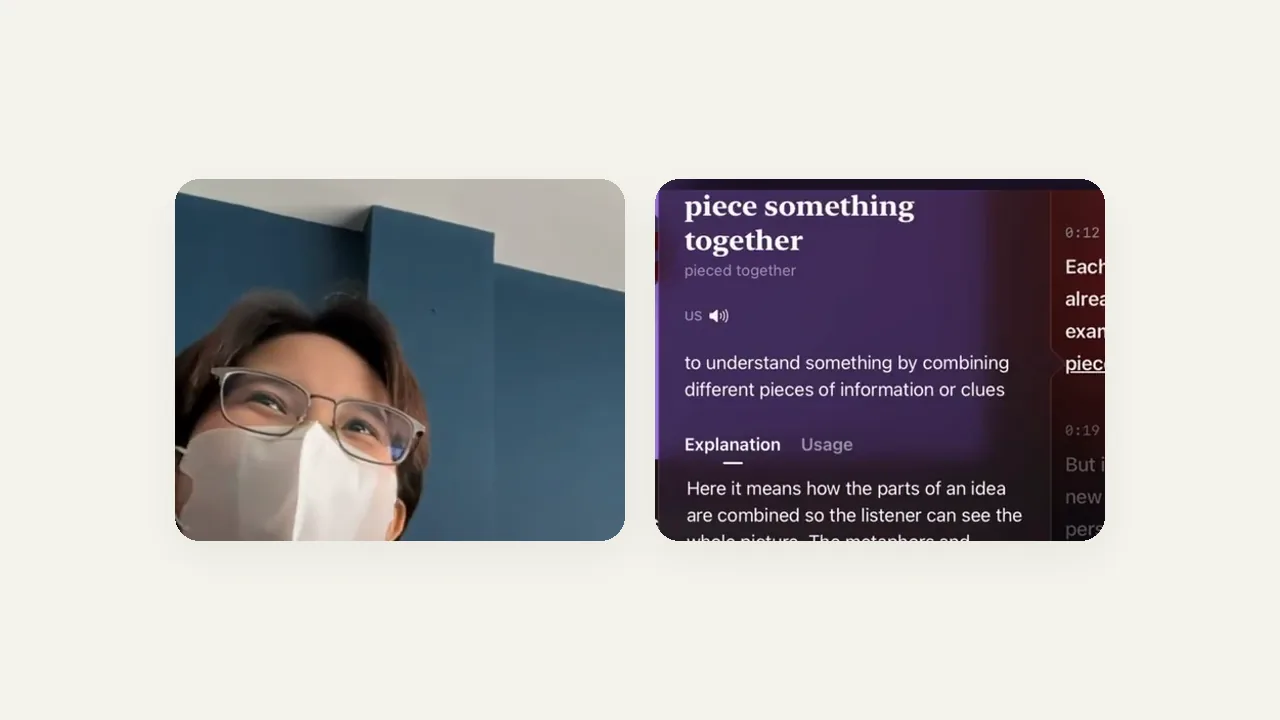
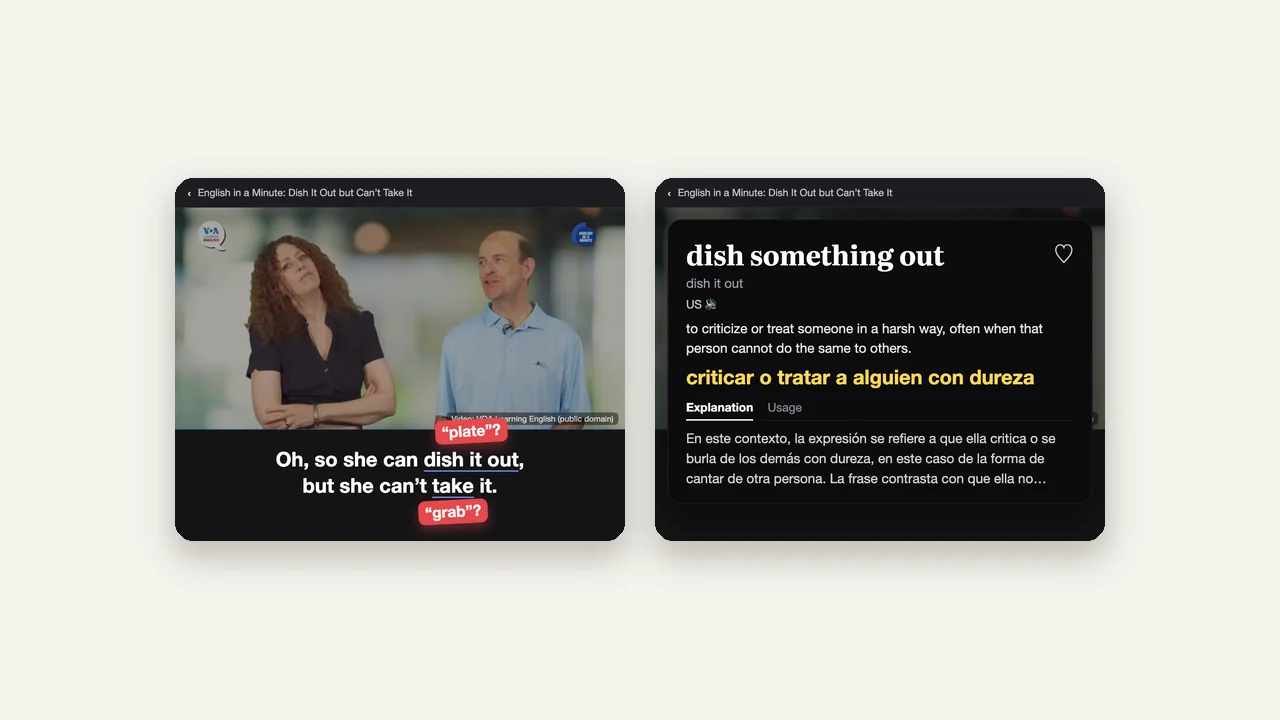
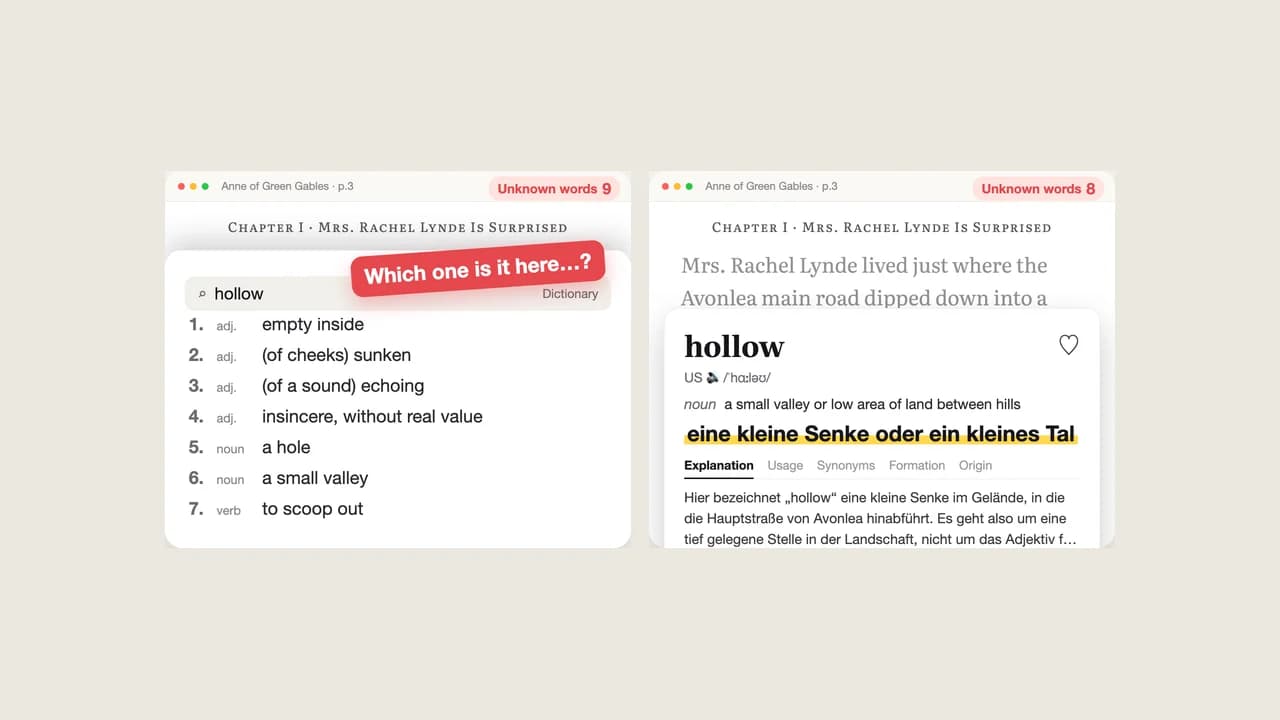
在 DexSpeak 閱讀文章、電子書,或觀看有英文字幕的影片時,可以在上下文中查看單字與片語的意思,並連同原句一起收藏。接著把收藏當成開口練習的提示:先回想意思,再說一句與自己有關的話。工具幫助你理解與保存,真正的口說練習仍需要自己說出口。
從這份清單挑出今天最想用的三個表達就夠了。你要累積的,是能在適當時機說出口的英語。