 DexSpeak
Reading a novel or watching a YouTube video in English usually goes well until one word stops you. You open a dictionary, scroll through ten meanings, guess which one fits, and by the time you come back the scene has moved on.
The fix is not to look up fewer words at all costs. It is to make each lookup fast, specific and part of the reading itself. Tap the word, see what it means in that sentence, and keep going.
Why stopping to look things up breaks your learning
Every time you leave the page, you pay twice. You lose the thread of the story, and you lose the context that would have made the word easy to remember.
A general dictionary also gives you too much. Most common English words have several meanings, and the first one listed is often not the one you need. Choosing between them takes time and attention that should go into understanding the text.
The result is familiar: reading feels slow, videos feel tiring, and many learners give up on real English material and go back to exercises.
What a good word lookup should give you
When you tap a word, you need three things.
First, the meaning it has in this sentence. Not every meaning the word can have, only the one that applies here.
Second, an explanation in simple English. A short, plain definition keeps you inside English and builds your understanding of how the word is used.
Third, the way to say it. Hearing a word helps you recognize it the next time someone says it in a video.
Take this sentence:
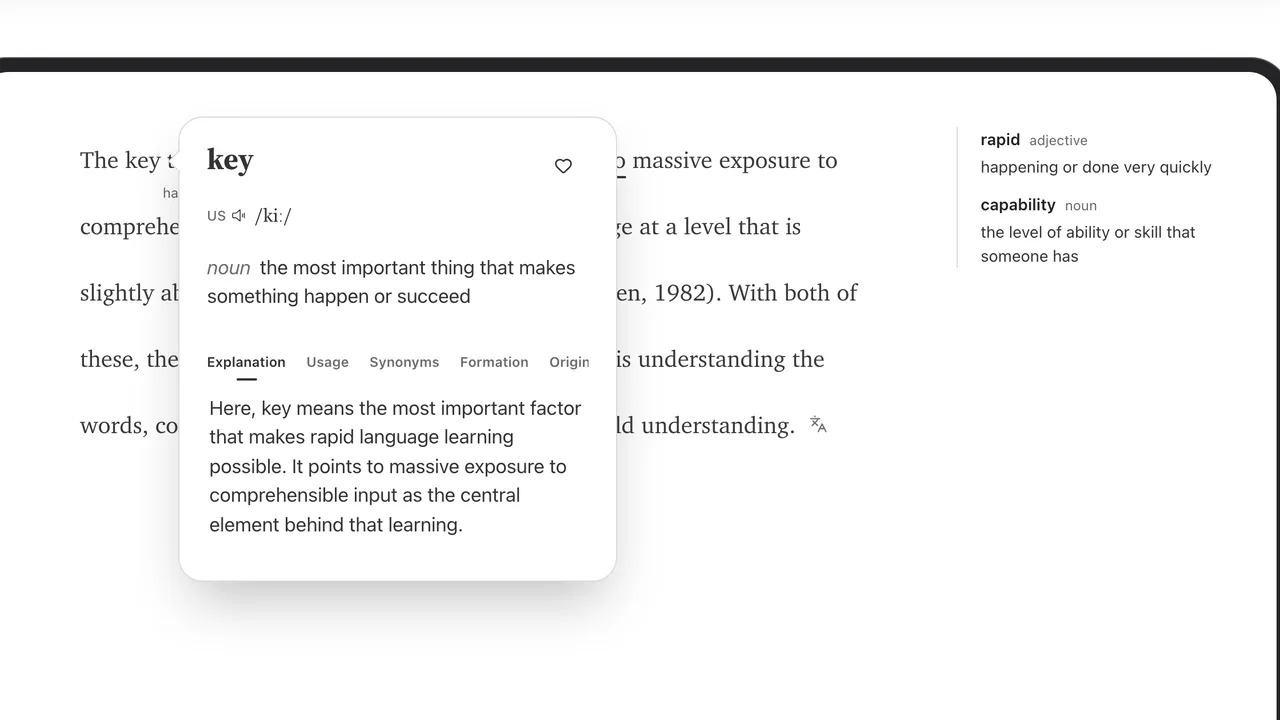
The key to this rapid language learning boils down to massive exposure to comprehensible input.
Here, key does not mean something that opens a door. It means the most important factor. And boils down to is a phrase: it means that something comes down to one main point. A lookup that understands the sentence will show you exactly those meanings.
When to translate the whole sentence
Sometimes you know every word and still cannot follow the sentence. The grammar is long, the order is unusual, or an idiom means something different from its words. That is the moment for a full translation.
Use it as a check, not as a replacement:
- Read the English sentence first and try to understand it.
- Translate the whole sentence into your language with one tap.
- Read the English again and notice which part caused the problem.
This keeps the English sentence at the center. The translation helps you see the structure, and the second reading is where the learning happens.
Tapping your way through an English book
Books let you move at your own pace, which makes them ideal for tap-and-read learning. Choose a book you can mostly follow, and tap only the words that block your understanding of the page.
If a page needs more than a few lookups, that is useful information too. Try an easier book for now, or read a chapter you already know in your first language. For more on choosing books, read how to read English books.
Tapping through YouTube videos and subtitles
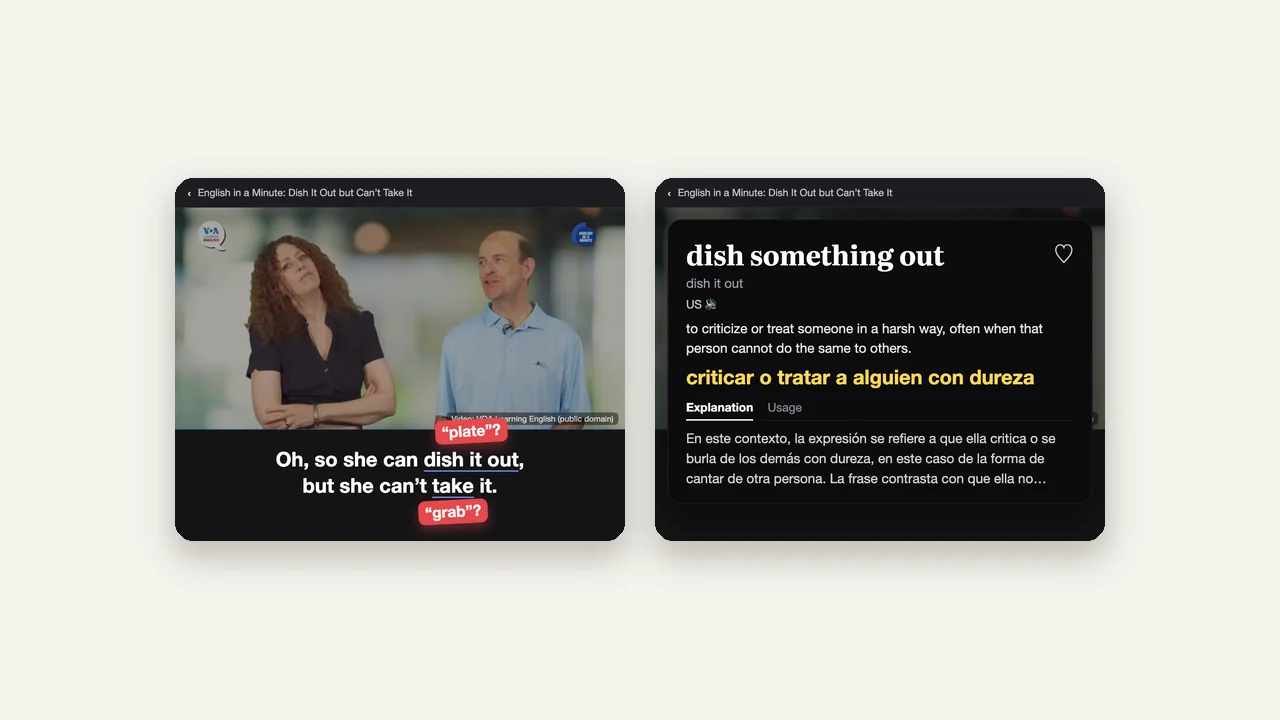
Videos move faster, so lookups need to be even quicker. Watch with English subtitles, pause on a line that matters, and tap the word or phrase you want to understand.
Many of the most useful expressions in spoken English are phrases rather than single words. Consider this subtitle:
On one hand, I think it's kind of relaxing and fun.
Kind of here does not mean a type of something. It means somewhat, or a little. Spotting phrases like this is much easier when they are already picked out in the subtitles for you. To train your ear as well, see how to improve English listening.
Save what you tap, with its sentence
A word you looked up once is easy to forget. Save the ones you would like to keep, and save them together with the sentence where you found them. When you review later, the sentence brings back the scene, and the scene brings back the meaning.
Keep the list short. Save the words that blocked you and the ones you would like to use yourself, and let the rest go. For a deeper look at this habit, read how to learn vocabulary in context.
Learn English with what you love
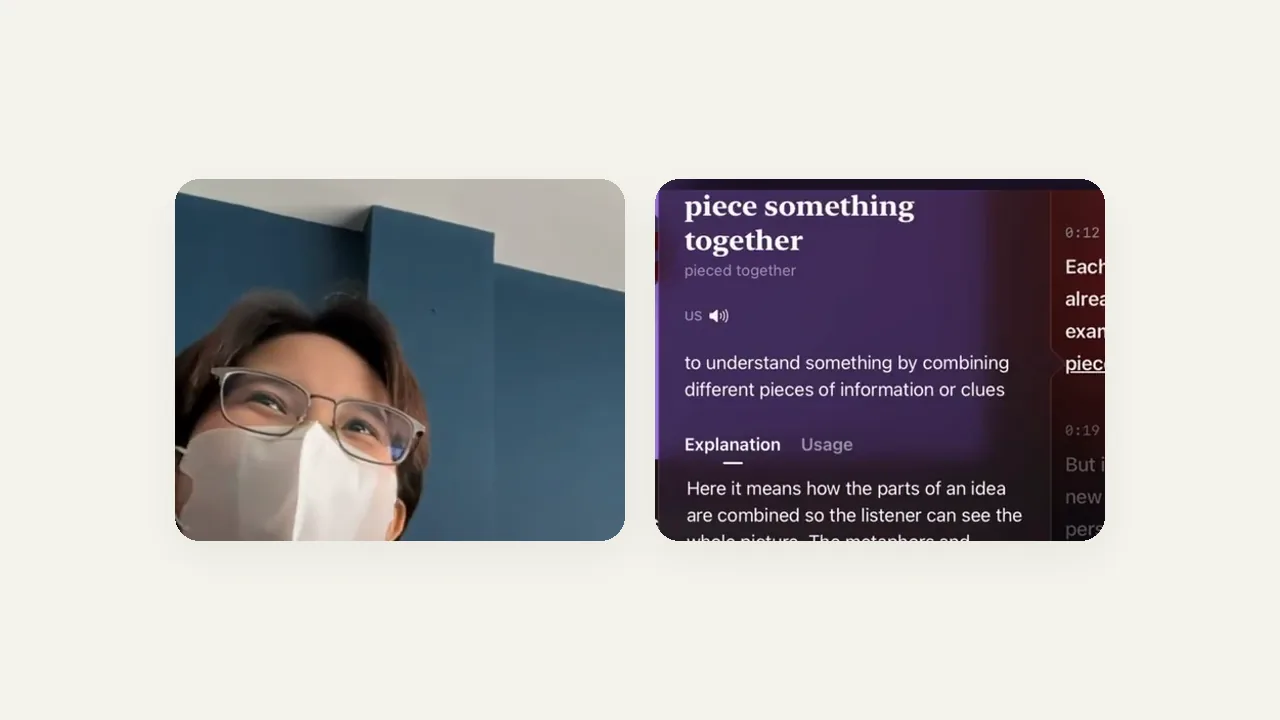
This is how DexSpeak is built. Read an EPUB book or a web article, or watch a YouTube video with subtitles. Tap any word or phrase to see what it means in that exact sentence, in simple English. When a whole sentence is the problem, translate it into your language with one tap. Tap the heart to save what you find, together with its sentence, and review it later. You can see the whole flow in the 24-second video on this page.
A simple routine is enough: spend fifteen minutes with a book or video you chose, tap only what blocks you, then spend three minutes looking back at what you saved today. The best material for learning English is the material you want to come back to tomorrow, so start with something you love and let English come along with it.